

'Bank has a robust capital adequacy base. Along with balance sheet preparation, the bank is focusing on strengthening risk management for the new regime.'
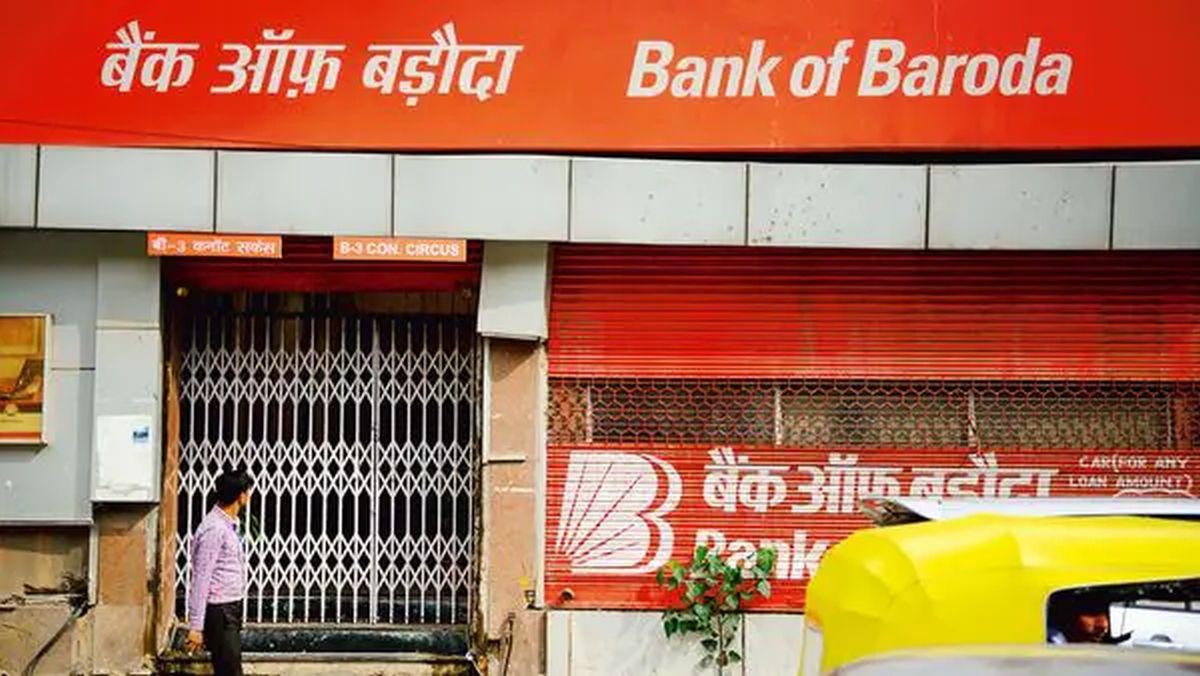
State-run lender Bank of Baroda will be making floating provision in the run up to transitioning to the Expected Credit Loss (ECL) framework for loan loss provisioning, its managing director and chief executive officer Debadatta Chand tells Abhijit Lele/Business Standard in an interview in Mumbai.
The bank's Q2 net interest margin (NIM) was 2.96 per cent, a sequential improvement, but lower than levels seen a year ago. When would re-pricing, especially on liabilities, be complete and NIMs begin to move up?
Bank has guided for NIM to be between 2.85-3.0 per cent for the current financial year. So as far as quarter to quarter is concerned, we have seen an increase in margin to 2.96 per cent.
We have seen the lowest price point in this quarter both on the deposit and advances side except MCLR rate. I think the liability re-pricing would be complete by December end.
The full impact of decline in cost of funds will be seen in the next quarter. Margin would be range bound in the third quarter and then there would be upside bias, with NIM likely to be higher than 2.96 per cent in the fourth quarter.
The gold loan book has grown substantially. Has demand shifted to gold loans from microfinance where lenders have tightened the lending norms?
The market is very big and we have very little exposure to the gold loan market. Within peer comparison also my scale is less. The asset quality is also good with very less non-performing loans in this asset class.
The Loan to Value norms are quite conservative and the only risk in this portfolio is price volatility.
As a strategy we want a growth higher than the normalised growth of 12-13 per cent.
We want to grow at 25-30 per cent in this segment.
I have not studied in detail to know whether the people who used to get micro finance are now opting for gold loans.
What will be the impact of the ECL framework for loan loss provisioning on the Capital Adequacy Ratio (CAR) of the bank?
The broad impact of ECL norms implementation would be roughly 1.25 per cent on the CAR of the bank. There is another guideline with regard to the Risk Weighted Assets migrating into Basel 3 regime.
There I think there is a positive impact (gain) to the extent of 60 to 70 basis points.
So on a net impact basis, we are looking at 0.75 bps impact on the CAR which should be spread over a period of five years.
Bank has a robust capital adequacy base. Along with balance sheet preparation, the bank is focusing on strengthening risk management for the new regime.
BoB has made floating provision of Rs 400 crore in the second quarter, would similar amounts be set aside each quarter to enhance buffers?
We are building a floating provision for transmission to ECL framework. It is not that every quarter we are going to do it. But, it gives a directional path indicating we need to buffer up floating provision.
We are very low in scale. But we want to increase that.
RBI has come out with draft norms for banking financing for mergers and acquisitions. How bank plans to tap potential opportunities? BoB also has an investment banking subsidiary BoB Capital Markets.
Would it look for collaborations to capitalise on opportunities in the M & A financing space?
Our domestic corporate book is almost Rs 4 trillion and internationally it is almost Rs 2.2 trillion. Globally M&A financing is an established product.
We understand this product as far as the international market is concerned.
India is going to migrate to a mature market and the bank has underwriting capacity for such opportunities.
BOB Capital market can play a good role in advisory as far as M&A acquisition is concerned. We will evaluate any need for collaborations for it in the future.
Feature Presentation: Aslam Hunani/Rediff










 © 2026